Braised in Bryan: GOP Attorney General Candidates Hit Road in U.S. Senate-Focused Campaign Trail
 By Brad Johnson
Somewhere between the boots, the braised short rib, and the Brazos County residents, the pound-for-pound most interesting campaign in Texas this election cycle morphed into one marked by a narcissism of small indifferences.
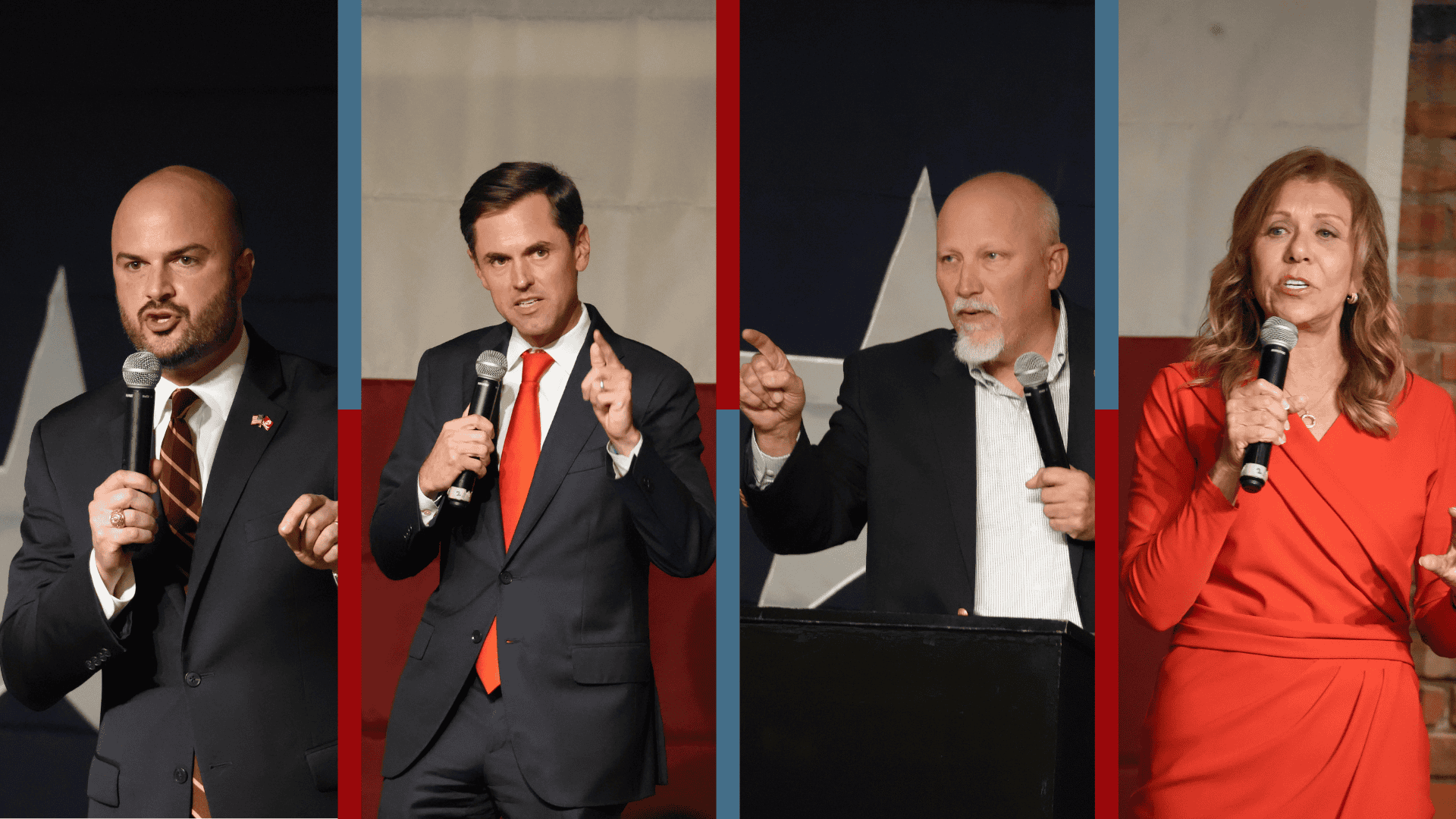
Each of the four Republicans vying for Texas attorney general — U.S. Rep. Chip Roy (R-TX), state Sens. Mayes Middleton (R-Galveston) and Joan Huffman (R-Houston), and former Trump appointee Aaron Reitz — gathered Friday night in Bryan as a cold front neared and cancelled campaign events over the weekend.
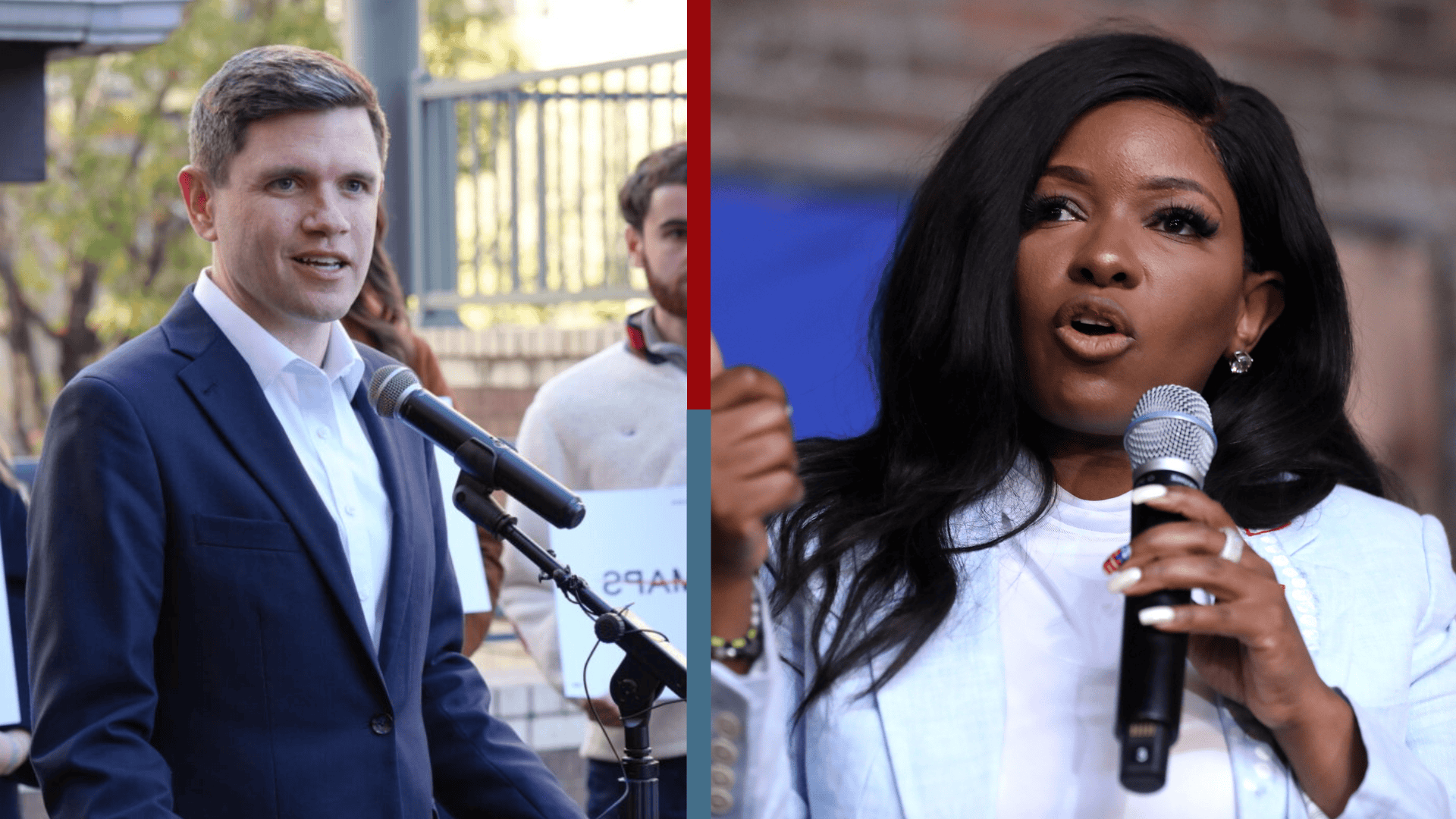
The candidates are running to replace Ken Paxton, the current attorney general who is instead seeking a spot in the U.S. Senate. The three Democratic candidates also running for the GOP-favored seat are state Sen. Nathan Johnson of Dallas, 2022 attorney general candidate Joe Jaworski, and Dallas attorney Tony Box.
On Friday, underneath string lights tied up in the rafters of a century-old ice house, the four GOP candidates delivered their 13-minute stump speeches, met not with thunderous applause but with perfunctory acknowledgement from the crowd.
This is very often the reality with which these candidates, and others down-ballot, must contend. This year’s competitive and contentious U.S. Senate race is at the top of the ticket, and with it, the most intrigue. The crowd Friday seemed to confirm that as they gave a single standing ovation for U.S. Rep. Wesley Hunt, a Houston congressman and U.S. Senate candidate, while showing nothing of the sort for most other candidates in attendance.
Huffman spoke first, methodically rattling off her lengthy list of accomplishments inside the courtroom and at the Texas Legislature. Having formerly served as a prosecutor, judge, and state senator since 2009 with a focus on public safety issues, Huffman has the deepest on-paper resume of the group.
But that resume clearly did not scratch the crowd’s itch.
Next up was Middleton, who delivered his usual stump speech emphasizing his legislative accomplishments: the passage of marquee red meat bills ranging from prohibitions against biological males competing in female sports to the ban of employment-based COVID-19 vaccine mandates.
A new pitch and the candidate drew the same mild reaction from the crowd.
Then came Reitz, who opened by jabbing his opponents’ legislative-heavy resumes. His elevator pitch, an aggressive proclamation of his work history under notable conservative figures, went as follows: Paxton’s offensive coordinator, Trump’s MAGA attorney, and a fighter of domestic enemies.
That, too, landed with thunderous indifference, though the crowd did seem pleased by the fact that Reitz introduced himself as an aggie, if their applause was any indication.
Last came Roy, who highlighted his endorsement from U.S. Sen. Ted Cruz (R-TX) — his and Reitz’s former boss — and ticked off his self-identified competitive advantages over the others: serving in elected office (Reitz hasn’t); trying cases in the courtroom (Middleton hasn’t); and ranking among the most conservative lawmakers by scorecard groups (Huffman hasn’t).
The irony of this specific race is that plenty of political observers have noted each of these candidates would likely serve as very similar attorneys general by working alongside a Republican administration and all but certainly suing a Democratic administration, along with political or positional allies.
Because of that, contrasts between the candidates have focused on the minute details over the broader picture — a vote here, a missing resume point there.
Middleton is the only candidate so far to go negative on television against Roy, the clear frontrunner in the race, according to most polling. Middleton, who has self-funding capabilities, has said he views the race already as a runoff between himself and the congressman. Of the $7.8 million in paid media advertising spent in the race so far, 80% of it comes from Middleton, who is personally wealthy, far beyond any other candidate in the field.
The race is now in the home stretch, with the moment of truth for which two candidates will make it to an all-but-certain runoff quickly approaching. According to the latest campaign finance reports, Huffman and Reitz both started the year with around $3 million left to spend, while Roy had $4.3 million and Middleton had $5.1 million remaining in their coffers.
Every poll in this race has shown Roy decisively in first place. Those polls have also typically shown a large number of undecided voters in the race. An October survey from the University of Houston showed that 36% of Republican voters said they don’t know enough about Roy, compared to 65% for Middleton, 63% for Reitz, and 58% for Huffman.
An internal poll from Roy’s campaign — a presumed best-case scenario for the candidate — put that undecided number at 25% and showed that he is one point shy of winning the primary outright. Each of the other candidates has scoffed at the suggestion that Roy is polling that high, though they have all acknowledged that he is leading the pack.
Reitz, meanwhile, has maintained a steady stream of fire at Roy on Twitter, but that only goes as far as whether the people who see those criticisms are convinced by it and actually vote in Texas Republican primary elections.
With the primary nearly a month away, these candidates have a lot of work to do to break through the attention barrier illustrated by this crowd being more enthralled with the cheesecake on their plates than the speeches going on in front of them.
 By Brad Johnson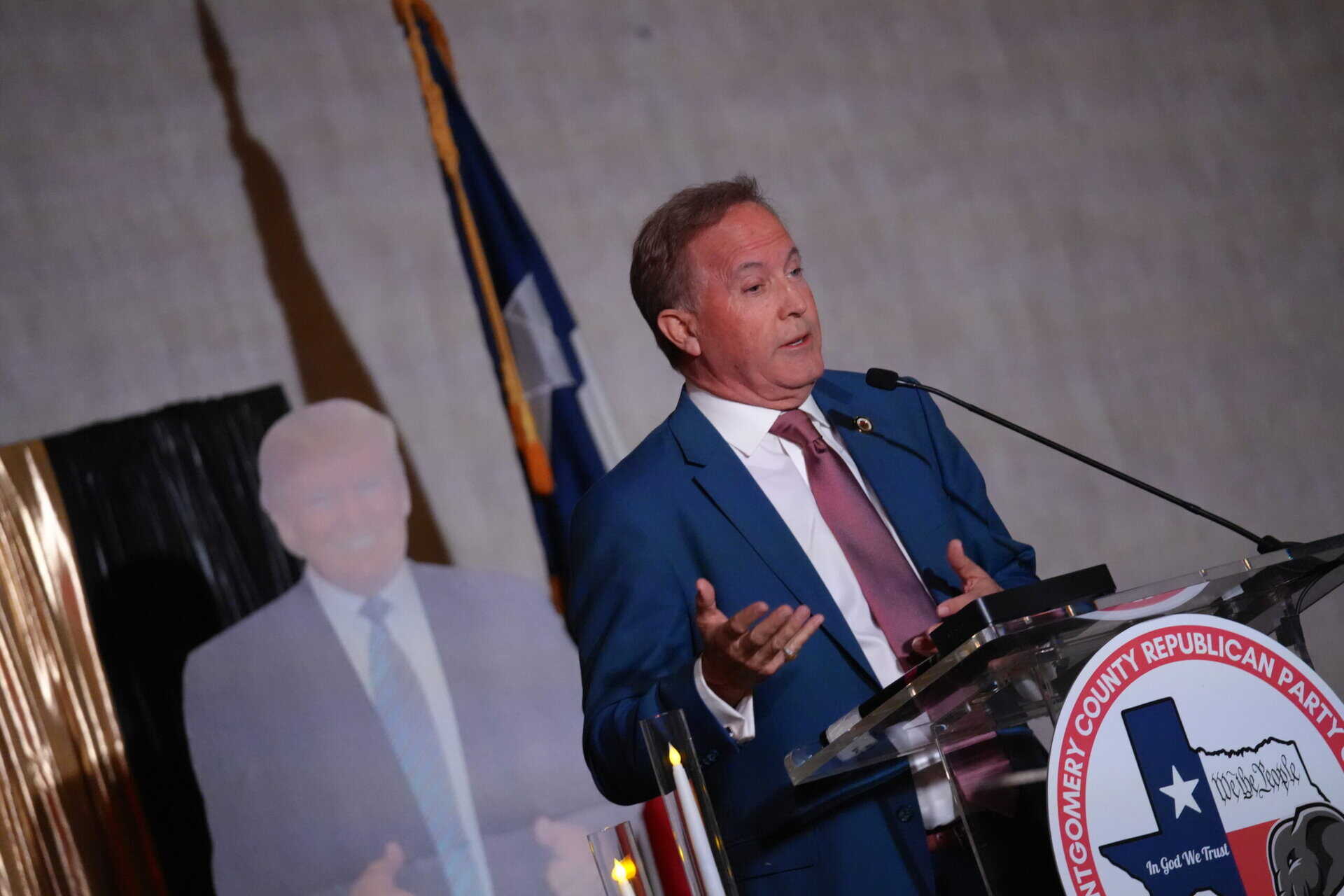
 By Jonathan Richie