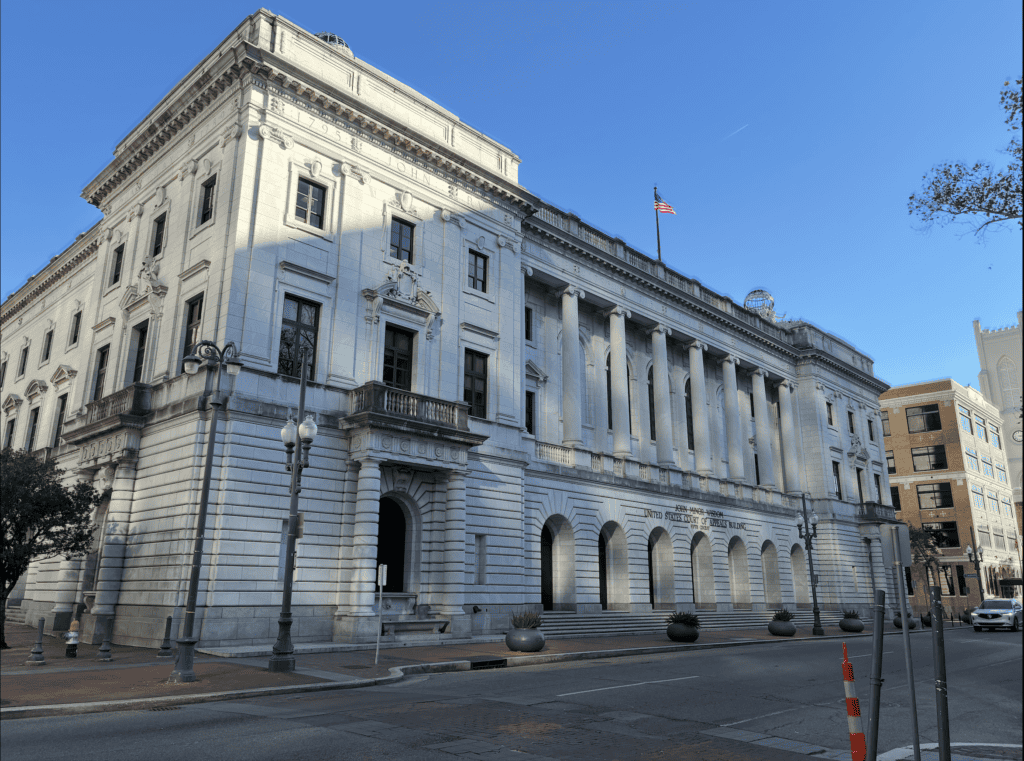
NEW ORLEANS — The U.S. Court of Appeals for the Fifth Circuit heard arguments Tuesday over laws passed in Texas and Louisiana requiring public schools to show posters of the Ten Commandments in classrooms.
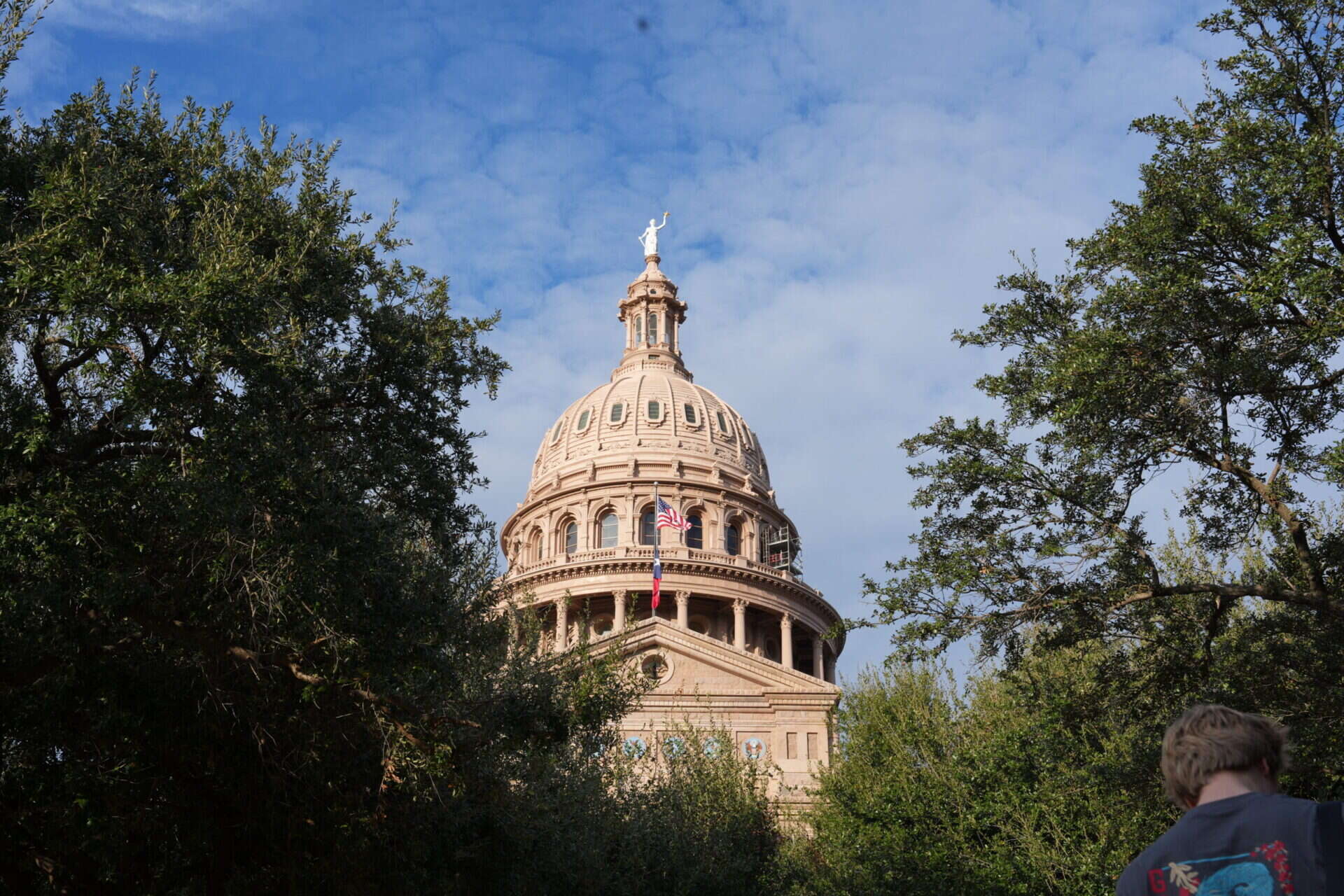
At issue is legislation the Texas Legislature passed in 2025 to require public schools to post donated copies of the Ten Commandments in classrooms. The law was immediately challenged in 11 public school districts across the state. An Austin-based federal district judge soon after barred the implementation of the new law in those districts.
Attorney General Ken Paxton appealed to the Fifth Circuit, which then combined Texas’ case with one involving a similar law in Louisiana. Because a Fifth Circuit panel had already blocked Louisiana from implementing the law, Texas was able to join the case at the en banc level, meaning it was heard by all 17 of the court’s active judges.
The Ten Commandments law has become a hot-button issue in the culture war, with Democrats suggesting it represents an unconstitutional violation of students’ religious freedom and the separation of church and state. Republicans claim that the law is simply recognizing the Decalogue’s historical importance to American jurisprudence.
The attorneys for Louisiana went first, trying to make the case that the law should be upheld. Judges pressed state attorneys on the grounds that using the King James translation — which is predominantly used in the Protestant tradition — creates an atmosphere in which the government favors one religion over another.
That specific translation, Louisiana said, is a long-standing tradition in America. The attorney added that just because a state takes an action tied to Christianity, it doesn’t mean the government is unconstitutionally discriminating against other religions.
Appeals to the historical governmental use of the Ten Commandments featured prominently in presentations by both Louisiana and Texas.
In 2019, the U.S. Supreme Court established the history and tradition test, creating a “presumption of constitutionality for longstanding [religious] monuments, symbols, and practices.” This reversed the Lemon Test, established by SCOTUS in 1971, which required government action to have a secular purpose and effect.
Attorneys for Texas argued that the mere posting of the Ten Commandments is not an establishment of religion. The passive display, Texas argued, “does not require any belief,” and schoolchildren would not be forced to subscribe to any theological tenets.
“The question is, is it creating an established church that would have been recognized as an establishment by the founding generation,” said Texas Solicitor General William Peterson, adding that the state law does not create the “Church of Texas.”
Jonathan Youngwood, the attorney hired to represent the coalition suing to stop the law, went next and fielded intensive questioning from several judges. Youngwood argued that the “religious dictates” in the Ten Commandments were coercive and would confront schoolchildren of other faiths or atheists in an unconstitutional way. He mainly took issue with the first commandment, which reads: “Thou shalt have no other gods before me.”
The judge then asked if significant historical documents, like the Declaration of Independence, President Abraham Lincoln’s second inaugural address, or the Gettysburg Address, could be posted in classrooms, highlighting the religious nature of those documents, which have exclusive religious claims and biblical references.
Youngwood suggested the difference was that those speeches were not primarily religious. The command to have “no other gods” was too egregious, he said, for schoolchildren to read on the wall.
Asked why other governmental displays of the Ten Commandments, such as those in the chambers of the U.S. Supreme Court, do not constitute an establishment, Youngwood said that because the image depicting Moses holding the tablets is in Hebrew and shows only some of the commandments, it does not pose the same issue.
After the hearing, Louisiana Gov. Jeff Landry and Attorney General Liz Murrill addressed the media, saying they felt good about the court’s potential to rule in the state’s favor.
“We embrace our tradition and heritage,” Landry said, adding that children would either “learn to read the Ten Commandments or the criminal code.”
Meanwhile, opponents to the Ten Commandments laws denounced Texas and Louisiana for allegedly violating the constitutional doctrines of the free exercise of religion and the separation of church and state.
“This law requiring the posting of the Ten Commandments in public school classrooms, which are government-run, is a violation of that promise of Church and State separation,” said Rachel Laser, president of Americans United for Separation of Church and State, adding that it was “unconstitutional” and “un-American.”
Alanah Odoms, executive director of the Louisiana American Civil Liberties Union, said that she had heard from people who felt threatened that the state “would, in fact, privilege the Christian religion, and in fact, a Protestant interpretation of the 10 Commandments over other religions.”
“We must not treat our schools as bully pulpits,” Odoms said. “We must not treat our children as pawns.”
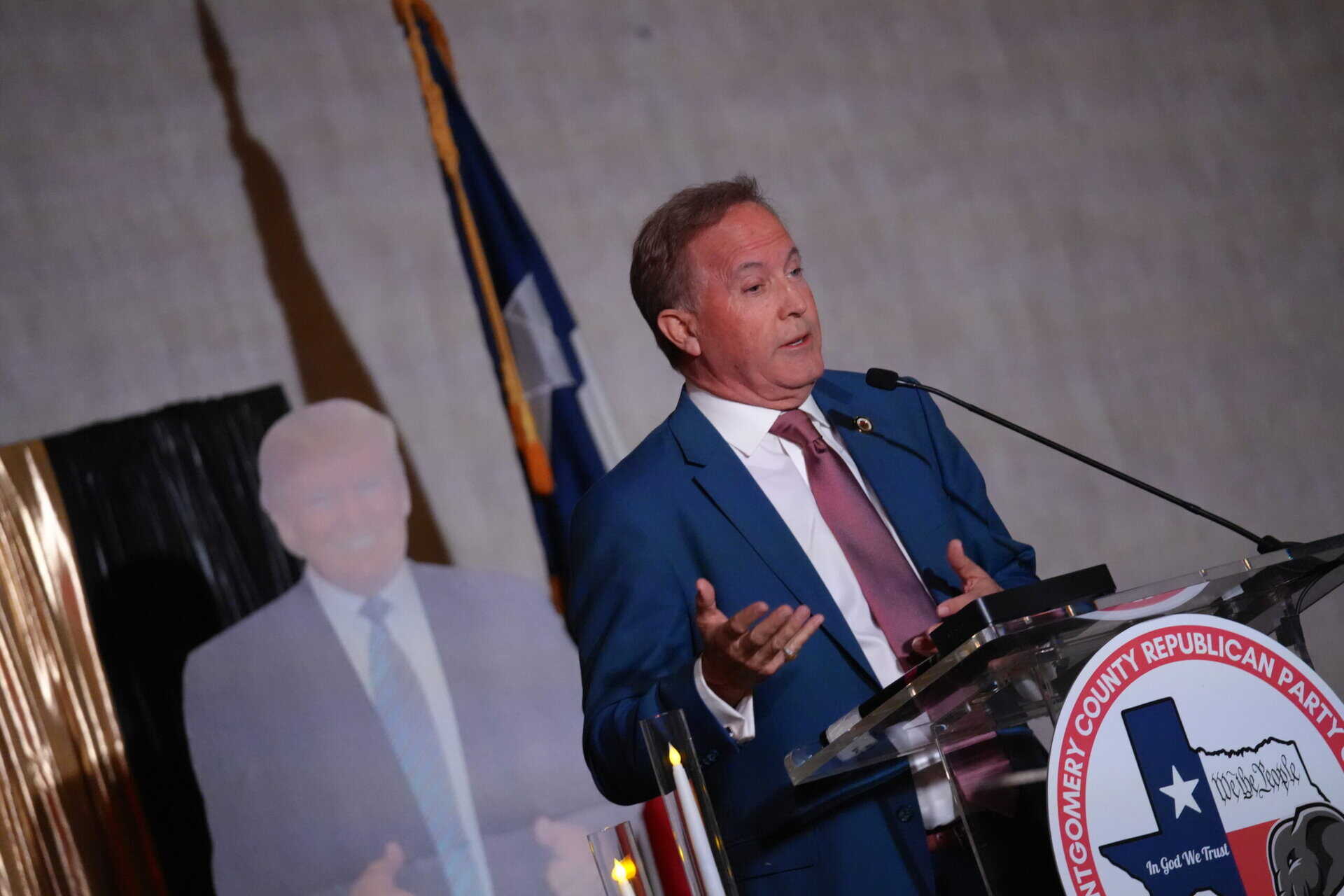
At a news conference prior to the hearing, Jonathan Saenz, president of the conservative activist group Texas Values, read a statement from state Sen. Phil King (R-Weatherford). Texas Values had filed an amicus brief on behalf of King and state Rep. Candy Noble (R-Lucas).
“When the Texas Legislature passed the Ten Commandments law, we did so to acknowledge a foundational part of our legal and historical tradition,” King said. “From the very beginning, our nation has openly acknowledged the role the Ten Commandments have played in shaping our laws and civic life.”
The court will consider the arguments and hand down a decision in the lower court. Regardless of how the Fifth Circuit rules, the case is likely on its way to the U.S. Supreme Court.