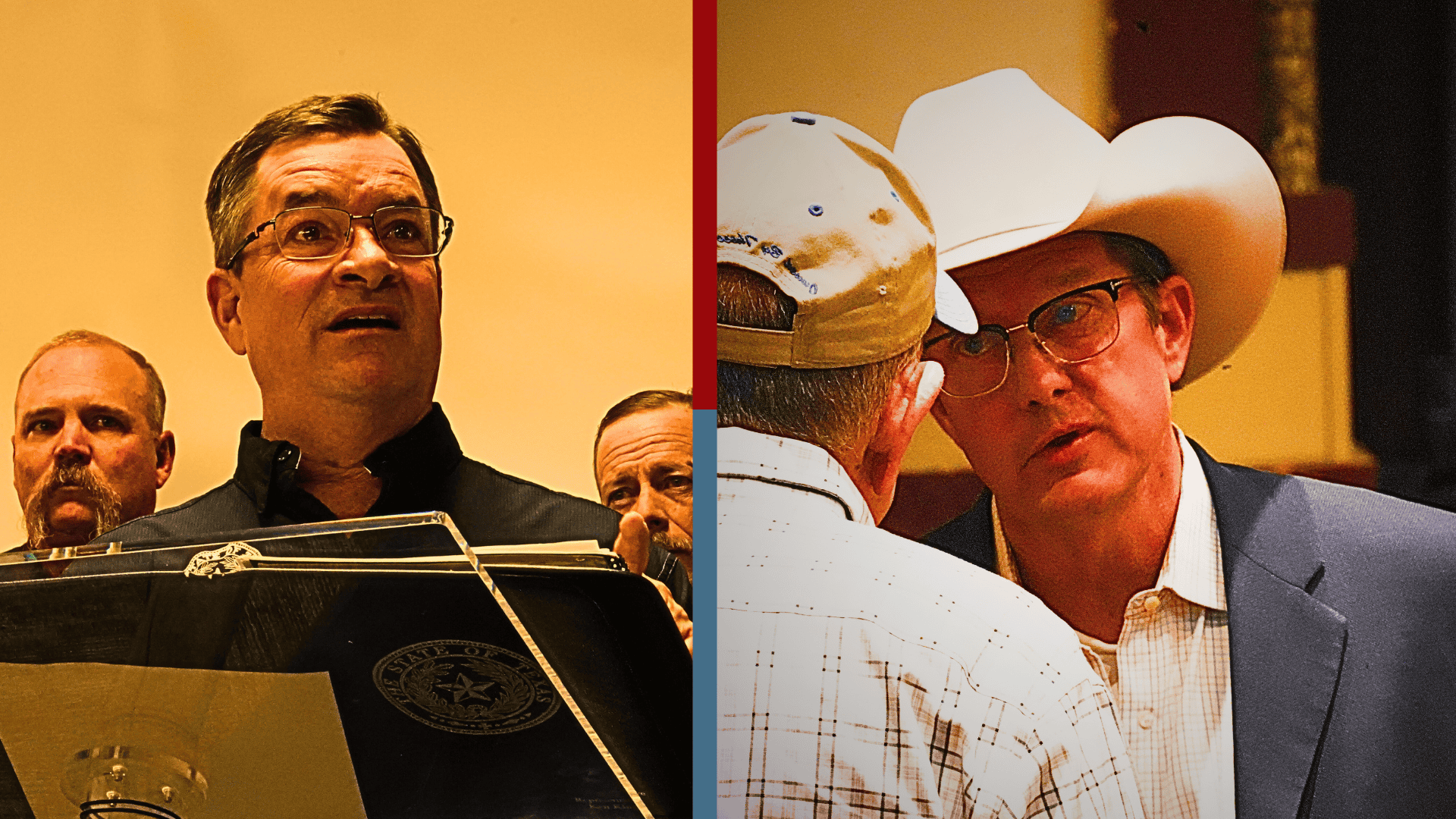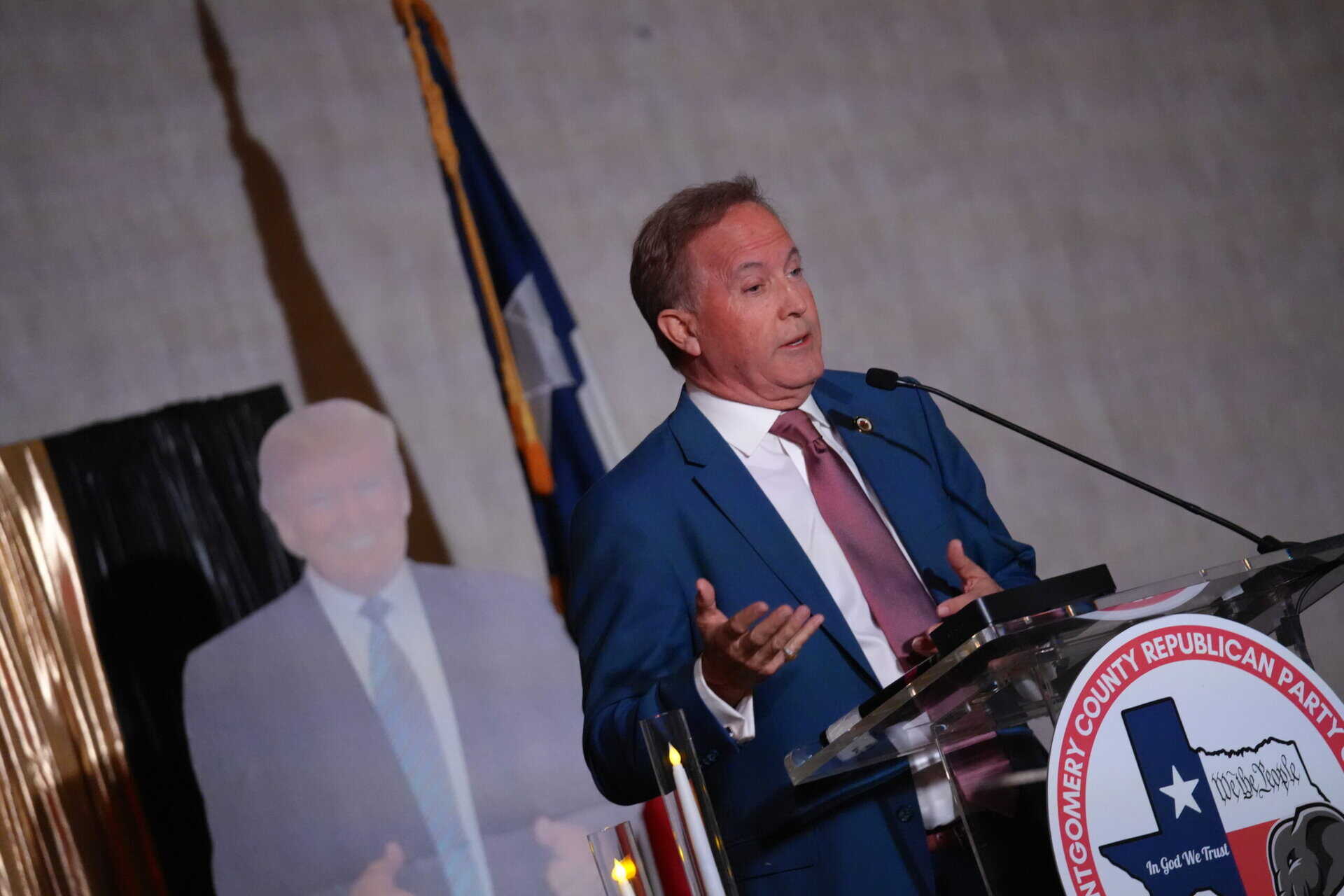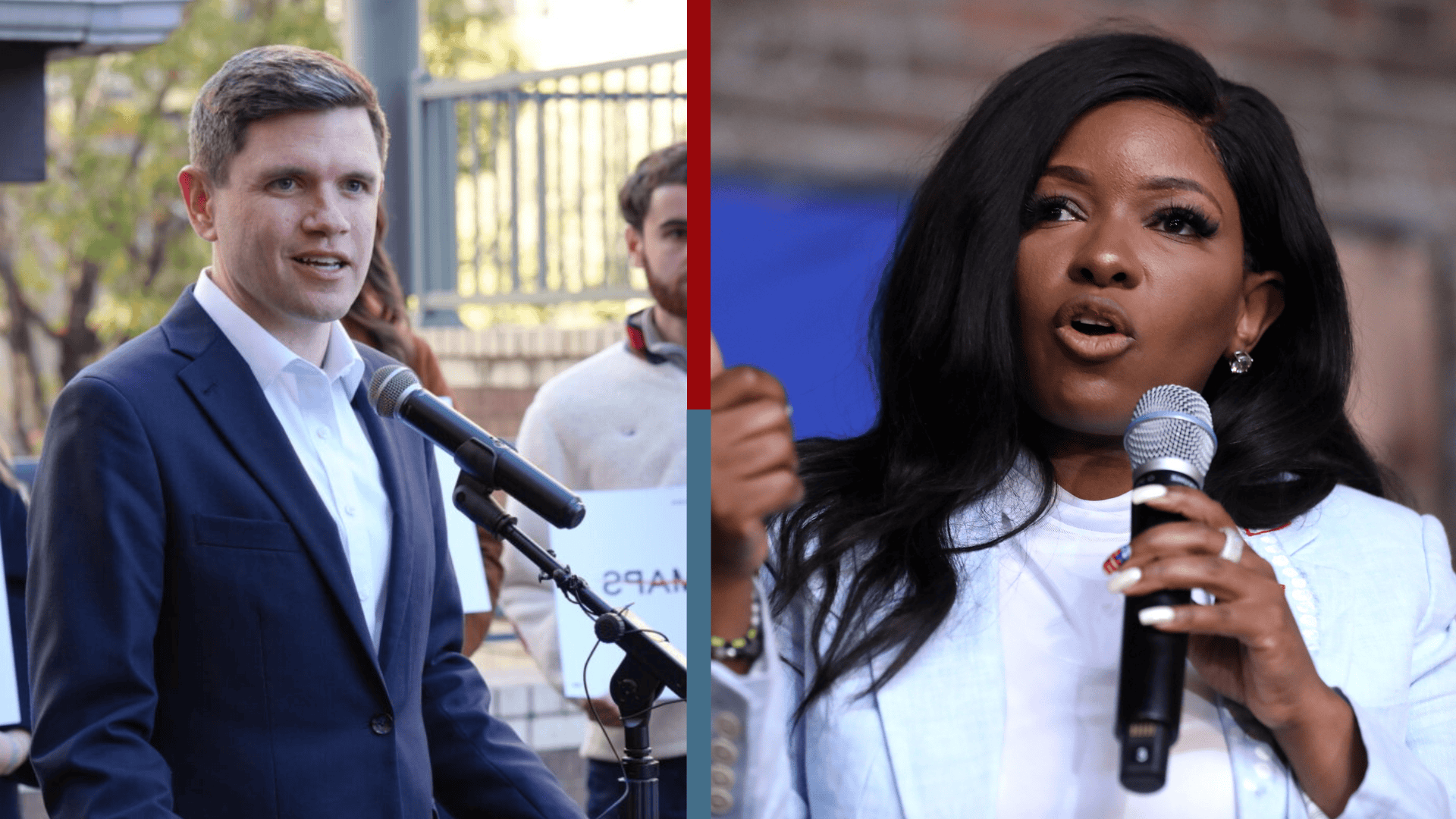
War paths are twisting and turning things. The biggest third party political group in Texas is weaving one, finding its way around immovable obstacles it was previously on a collision course with heading into this year’s election cycle.
Texans for Lawsuit Reform (TLR), the behemoth political action committee more responsible than most others for turning the state red, is coming off a tumultuous legislative session and has pivoted from an expansive hit list to now primarily one person whose scalp the group wants: state Rep. Marc LaHood (R-San Antonio).
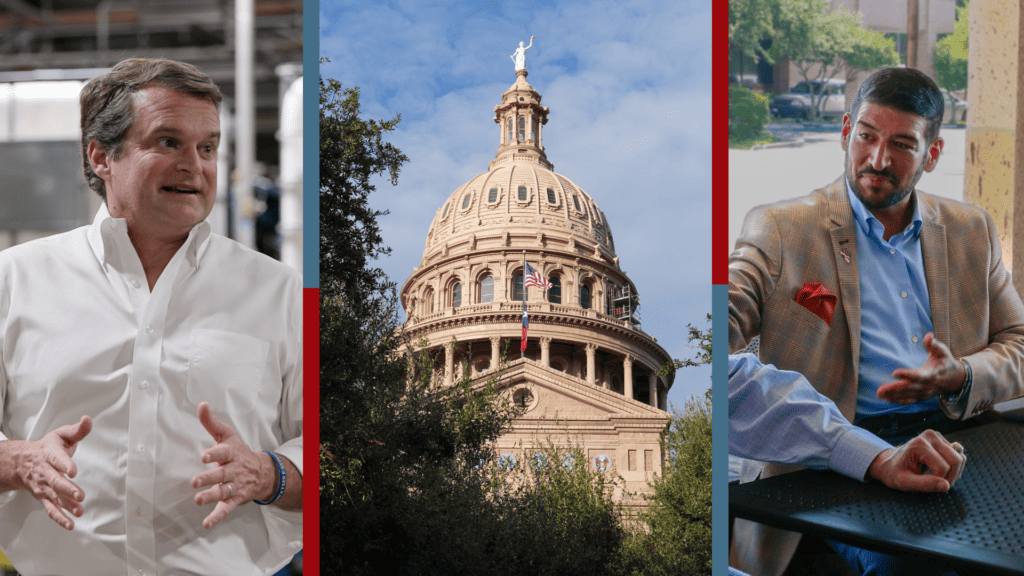
The tort reform proxy fight imbued in the 2026 primaries is focused on the seat held by LaHood, who is facing lobbyist and consultant David McArthur. Already, more than $850,000 has flown into the district for just media advertising purposes, per tracking firm AdImpact.
On top of that, LaHood — who was first elected to represent House District 121 in 2024 — has a name identification in the district that eclipses 98%, an unheard level of familiarity, according to a December poll conducted by the lawmaker’s campaign and shared with Texas Bullpen.
The district is flavor-blasted with the LaHood name. Some of that name recognition is baked in from 2024, when LaHood was the chosen pro-school choice candidate by Gov. Greg Abbott in his crusade to oust anti-voucher Republicans.
Now LaHood has become a totem for an entirely different policy — tort reform — with business groups on one side, personal injury attorneys on the other, and the candidates sandwiched in between the piles of outside money.
Marc the Bottleneck
The policy battle that played out last session occurred mainly in the House Committee on Judiciary & Civil Jurisprudence. The 11-member committee, all appointed by House Speaker Dustin Burrows (R-Lubbock), consisted of five Republicans — most of whom were friendlier to the tort reform desires of TLR — five Democrats generally opposed to the group’s initiatives and LaHood, a sixth Republican who was formerly a Democrat, stuck in the middle as the de facto swing vote.
One day after the Legislature adjourned last year, TLR President Lee Parsley sent out a scathing missive laying blame for the failure of the group’s priority bills at the feet of three lawmakers: state Rep. Mitch Little (R-Lewisville) for rallying support for a death knell amendment, Burrows for appointing the committee, and LaHood for killing two bills in committee and forcing the watering down of another.
“And so, for now, unscrupulous lawyers will continue to collaborate with unethical doctors to manufacture medical damages, mislead juries, and rake in ill-gotten gains,” Parsley wrote.
The email went off like a bomb in Capitol circles.
“Had it not been for TLR’s duplicitous negotiations, broken commitments, and relentless disrespect for our elected servants, we would’ve gotten there,” LaHood said in response.
Whatever smidge of goodwill that existed between the two sides had suddenly evaporated. It was now to be all out war.
Throughout the policy fight, both sides argued their case for a provision here and against a provision there in each of the contentious bills.
During one of the hearings, LaHood summed up the debate as: “Let’s be blunt. Y’all want this in because it’s gonna help you win a case. They don’t want it in because it helps them lose a case.”
Eventually, each of those top TLR priorities met their demise, even after substantial revision and limitation by the authors.
But the policy fight resurfaced on social media when LaHood invoked one of the world’s richest people, who also happens to be a recent TLR collaborator.
“I know you are a big financial supporter of [TLR] here in Texas. Last legislative session, one of their top priority bills (SB 39) attempted to remove trucking companies from financial liability for accidents in almost all cases, pushing 100% of that liability onto their drivers,” LaHood posted in response to one of Musk’s stating his friend’s wife died after being struck by a truck driven by an illegal immigrant.
Musk contributed $4 million over the last two years to TLR and the group’s Judicial Fairness PAC, which spent large in a successful 2024 effort to flip Democratic-held bench seats back to the GOP.
LaHood’s tweet sparked a fight in the comment section involving his supporters and TLR board members countering the officials’ assertion.
“FAKE NEWS, Rep. LaHood, but Texans expect this from ambulance-chasing billboard lawyers like you,” TLR Board Vice Chairman Emerson Hankamer said. “By corrupting the law, you are turning our justice system into a third world sham — the very thing you allege to fight against.”
What’s referred to as the “trucking bill” from the 2025 session was an attempt to revise a 2021 law that altered proceedings for civil lawsuits involving commercial motor vehicles. The revision would have expanded a trucking company’s ability to distance itself in court from a negligent driver when the driver — not the company — was at fault.
Business interests like TLR contended that trucking companies were being illegitimately thrown into the cauldron of litigation. Personal injury attorneys accused the bill’s author, state Rep. Jeff Leach (R-Allen), and his allies of helping companies dodge liability when their drivers maim or kill someone.
The legislation that ultimately passed the House’s judiciary committee was a 3-page addendum that limited the conditions under which certain evidence of an employer defendant’s failure to comply with regulations could be presented at trial.
There was a more expansive version of the legislation that did not get brought up for a vote in committee, thanks to LaHood blocking its advancement. That version included more substantive language stipulating the conditions under which an employer may be tied to the negligibility of their employee, or be held negligible itself. Negligible is often a tough standard to prove, particularly from a party not present at the accident.
Just as LaHood said during the hearing, the plaintiff side of the litigation ledger opposed changes that would make it harder to obtain payouts, while the defendant side wanted a higher standard to prove their client — the business — should be held liable for damages.
Around and around the debate goes, with little sign of reconciliation, which moved the battleground from policy to political.
Marc the Foil, David the Underdog
LaHood and McArthur, the lobbyist and consultant challenging the incumbent, are locked in an expensive race for a seat on the north side of Bexar County. Campaign signs flood the boulevards and vacant lots, with McArthur’s concentrated heavily in affluent neighborhoods and LaHood’s in lesser-income areas.
Much of the spending is made up by TLR and a host of groups its opposite, all with equally hackneyed names like Coalition for Working Families, Texas Heritage Fund, Citizens for Integrity and Accountability Foundation, and the First Amendment Alliance Education Fund.
The district has been blanketed with ads calling LaHood an “ambulance-chasing lawyer lining his pockets at [citizens’] expense” and labeling TLR an “anti-Trump dark money group that protects Chinese corporations” with the trucking bill at the center of the messaging.
“Why did Marc LaHood kill a conservative Republican bill to stop lawsuit abuse, hurting small businesses and driving up your insurance rates?” went one ad.
A counter ad followed, “Don’t believe the lies about Rep. Marc LaHood. Marc LaHood stood up to big insurance companies that care more about profits than people. And Marc fought to stop trucking companies from making themselves immune after an accident.”
All of this is also replicated on direct mail stuffing into mailboxes.
LaHood is buoyed by endorsements from President Donald Trump and Abbott, the governor, because of his vote for education savings accounts last year. He has also so far received around $750,000 from personal injury attorneys, including Arnold & Itkin’s Texans for Truth and Liberty PAC.
TLR co-founder Dick Weekley went directly at Arnold & Itkin, the new players on the GOP primary scene in Texas, in an op-ed with the Houston Chronicle last month.
“The same trial lawyers who once bankrolled Democrats are now spending heavily to influence Republican primaries in Texas, hoping to buy influence where voters least expect it. This isn’t a partisan conversion. It’s an infiltration. A charade,” Weekley wrote.
As TLR’s candidate hoping to oust LaHood, McArthur, a realtor and consultant who once worked in the George W. Bush White House, will have plenty of funding behind him. McArthur’s website features one messaging bloc focused on the issue underpinning the entire race, reading, “Stop frivolous lawsuits that increase costs and squeeze family budgets.”
The race is so prolific in its reach that even a New York-based Newsmax anchor has waded in, attacking LaHood and touting McArthur. The race for HD-121 is shot through with PACs, 501(c)4s, and now cable television newsmen who aren’t just part of the campaign — but a main facet of it.
Rather than take their war path primary wide, which would entail waging war on Burrows, who is serving his first term as House speaker, TLR has trained its fire on LaHood. In turn, Burrows is protecting LaHood.
On Jan. 29, Burrows is set to headline a San Antonio fundraiser for LaHood, with host levels ranging from $5,000 to $50,000, a range that looks more like a speaker’s fundraiser than for a rank-and-file House member.
And thanks to his sky-high name ID, LaHood will be a tough out. But TLR is throwing all they’ve got at him, leaning heavily on its $38 million PAC, the one that flipped a state a generation ago.